Case study structure: writing one that shows real work
A case study structure people believe: the situation, what you did, results with dates and sources, what you would change, client permission and honest numbers.
On this page (9 sections)
A case study is the closest thing a small business has to proof. A prospective customer reads it to answer one question: has this business solved a problem like mine before? This post shows you how to write one that answers it honestly: a case study structure that works for any trade, results with dates and sources, permission from the client, India's rules on claims and testimonials, and how case studies fit Google's idea of experience. A worked example from a made-up solar installer in Nagpur runs through each step.
Why case studies earn trust
Google's guidance on helpful, reliable, people-first content asks whether content clearly demonstrates first-hand expertise and a depth of knowledge, for example expertise that comes from having actually used a product or service. It discusses this as E-E-A-T, short for experience, expertise, authoritativeness and trustworthiness, and says trust is the most important of them. A case study about a job you really did is first-hand experience in its plainest form.
Two cautions. Google says E-E-A-T itself is not a specific ranking factor, so a case study is not an SEO trick. And it builds trust only if a reader can believe it, which is what the rest of this post is about. Our guide to E-E-A-T for small businesses covers the other ways to show experience on your site.
The structure: situation, work, results, lessons
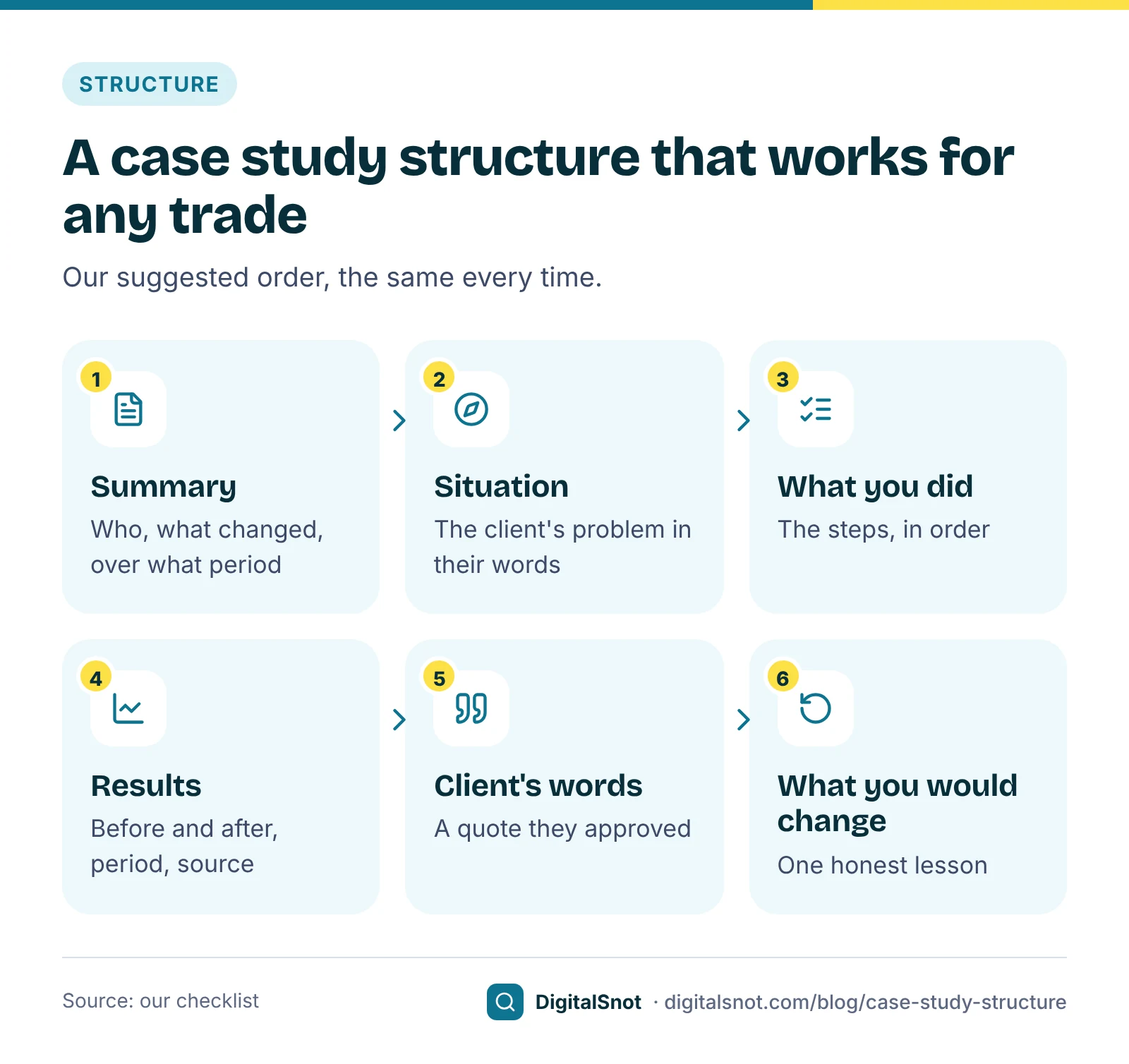
Readers skim, so use the same order every time. Our suggestion:
- Summary. Two sentences: who the client was, what changed and over what period.
- The situation. What the client needed, in their terms. "Took every order on WhatsApp and lost some at festival time" says more than "needed a digital solution".
- What you did. The steps in order, with enough detail that a reader can picture the work: what you checked, what you changed and what you chose not to do.
- The results. Each with a before and after figure, the period and the source.
- The client's words. A short quote they have approved.
- What you would change. One honest lesson. It costs you nothing and makes everything above it easier to believe.
- The next step. How a reader with the same problem can reach you.
Our Case Study Builder lays out a case study in this order from what you type: the problem, your steps, up to four results with their periods and sources, the quote, the lesson and the next step. You can copy it as text, Markdown or HTML, print it, or copy short posts for LinkedIn and X. It uses fixed templates, not AI, so it writes nothing you did not give it.
Results with dates and sources
A result without a date or a source is a claim nobody can check. Chapter I of the ASCI Code says that descriptions, claims and comparisons about matters of objectively ascertainable fact should be capable of substantiation, and that advertisers must produce that substantiation when ASCI asks for it. So write every result as if someone will ask:
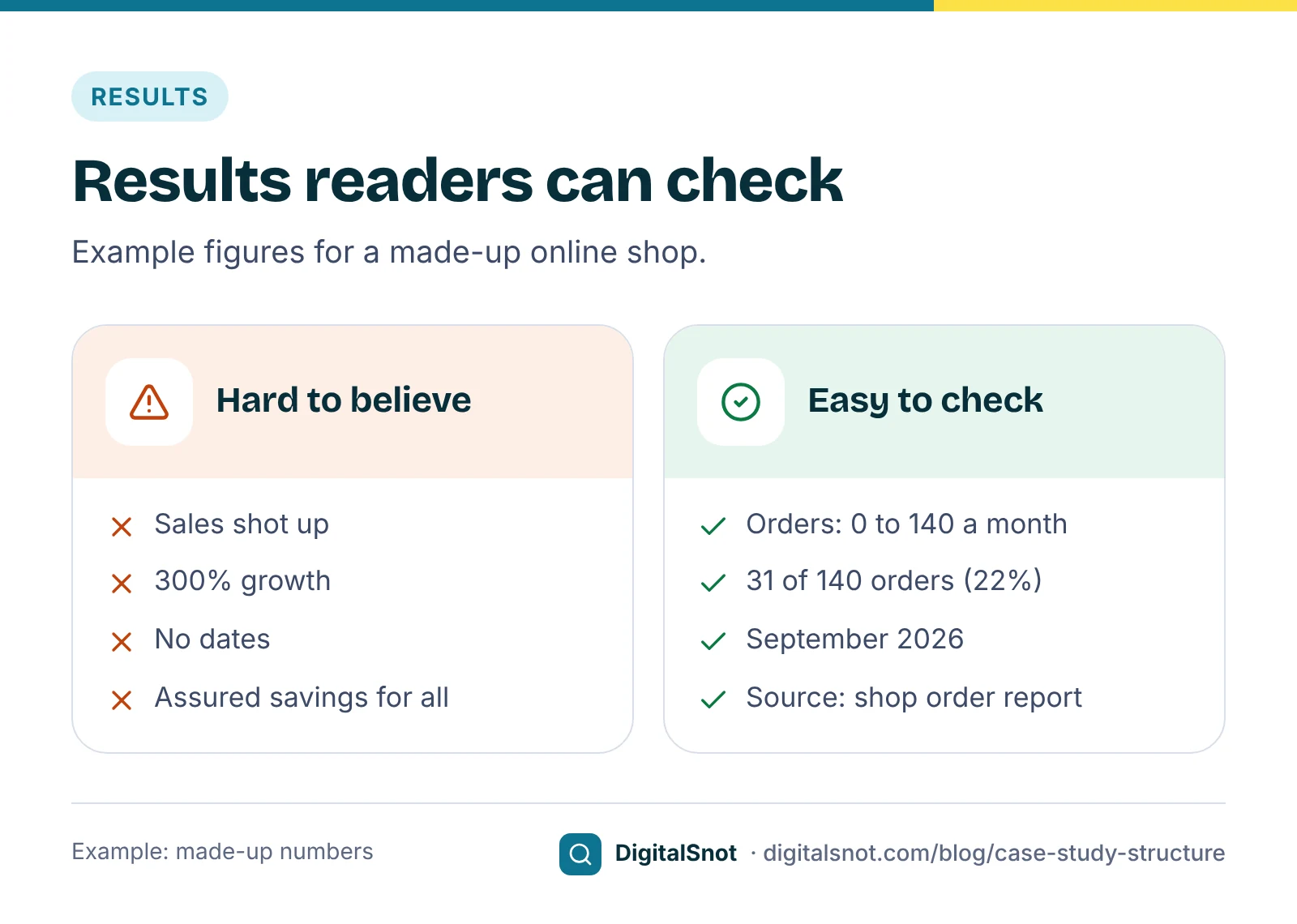
- Before and after. "Online orders per month: 0 to 140" tells a reader more than "orders shot up".
- The period. "September 2026", or "April to June 2026 against April to June 2025", so the comparison is fair.
- The record. "Shop order report", "electricity bills", "Search Console". Keep a dated export or screenshot in your files.
- Counts behind percentages. "31 of 140 orders (22%)" rather than "22%", because a big percentage from a small base can mislead.
- Estimates labelled. If a figure is the owner's estimate, say so, or measure it for a week and use that.
The Case Study Builder checks each of these. It flags a result with no period or no source, a source too vague to check, an estimate shown as a measured fact and a percentage with no count behind it. It can also round figures so they never overstate the change, and add a line that results vary.
Permission from the client
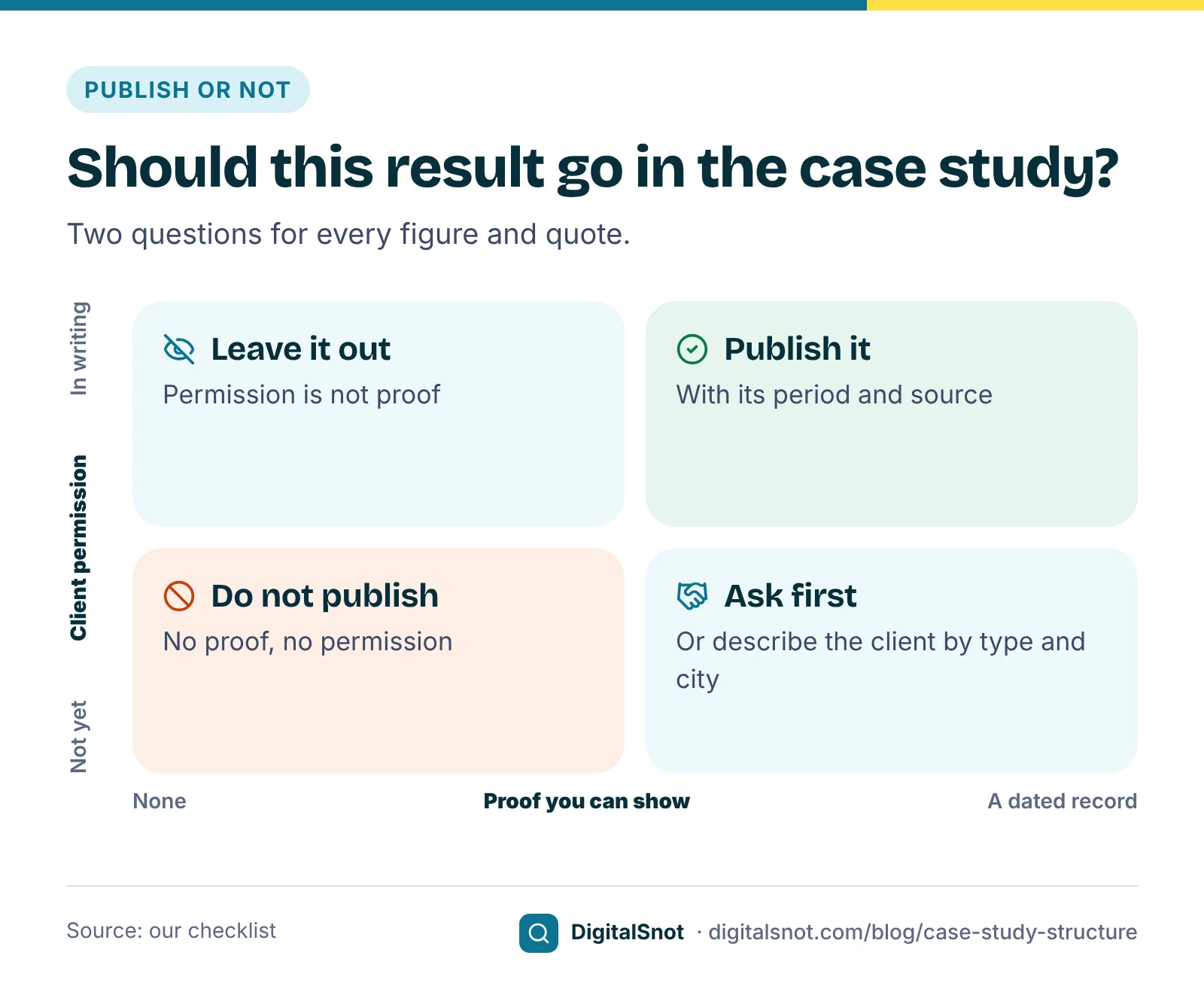
Ask before you name anyone. Chapter I of the ASCI Code also says advertisements must not, without permission, refer to a person, firm or institution in a way that gives the advertiser an unjustified advantage, and that the advertiser must produce that permission if ASCI asks. Our suggestions for a case study:
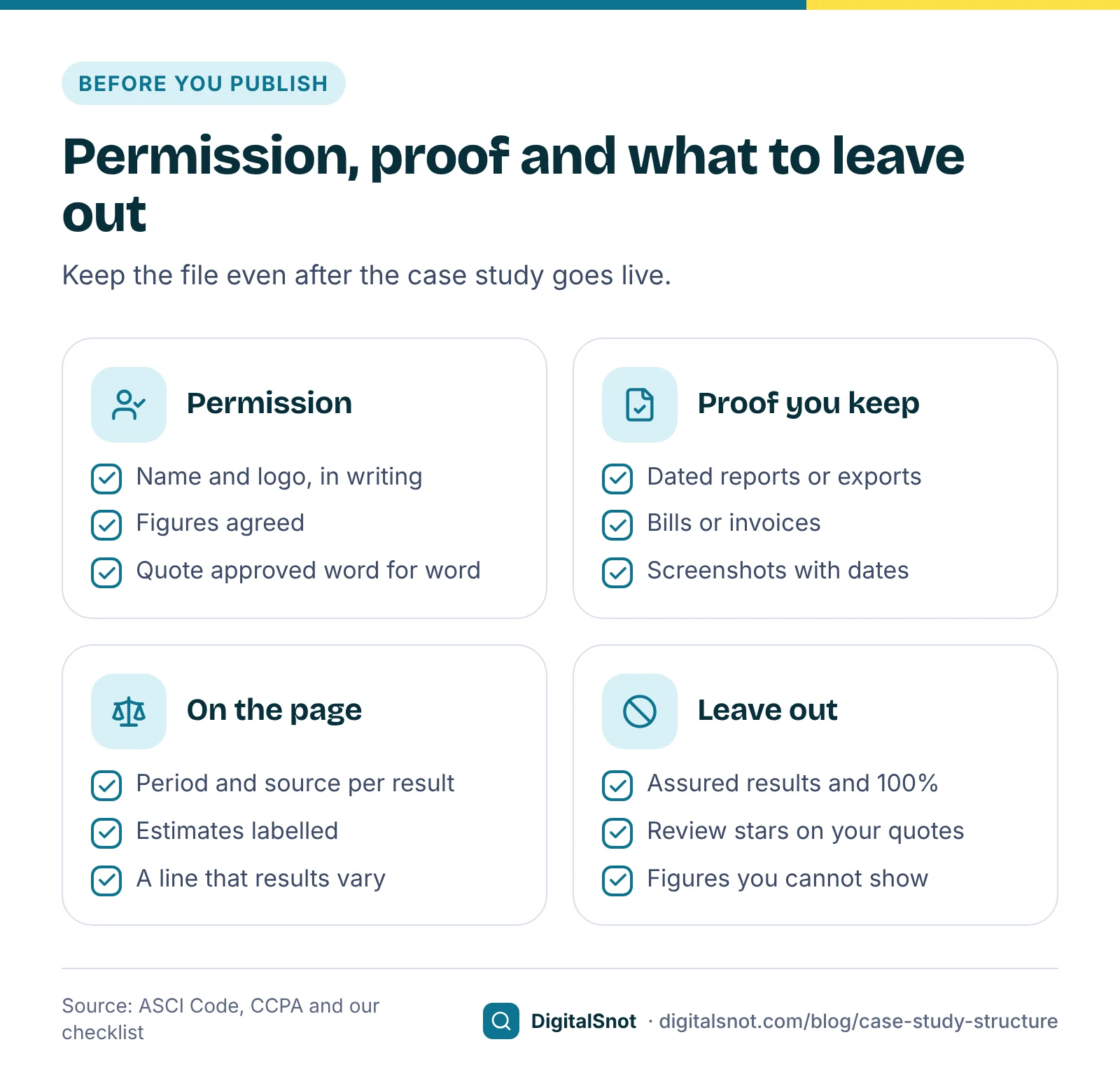
- Get it in writing. An email that says "yes, you may name us and publish these figures" is enough to keep.
- Agree on the figures. They are the client's numbers. Show them the draft before it goes live.
- Have the quote approved word for word. ASCI's guidelines on testimonials and endorsements say testimonials must reflect the genuine, reasonably current opinion of the person making them, based on adequate information about, or experience with, the product or service.
- Say if they got something. If the client received a discount or free work for taking part, say so next to the quote, so readers can judge it.
- No permission yet? Describe the client by business type and city, such as "a dairy in Wardha", and leave their name, logo and quote out.
The Case Study Builder keeps the client's name and quote out until you tick that they agreed, and shows a disclosure line under the quote if they received something for it.
Honest numbers only: the rules in India
A case study on your website promotes your work, so give it the same care as an advertisement. Three rules matter most:
- No false promises. Under the Consumer Protection Act, 2019, an advertisement that gives a false guarantee is a misleading advertisement. One client's result is not a promise to the next, so leave out words such as "assured" and "100%".
- No small print to rescue a bold claim. The Central Consumer Protection Authority's guidelines on misleading advertisements and endorsements, 2022 say a disclaimer must not hide material information or try to correct a misleading claim. The CCPA can fine manufacturers, advertisers and endorsers up to ₹10 lakh for a misleading advertisement, and up to ₹50 lakh for later ones.
- No invented testimonials. The CCPA has ordered a coaching institute to stop using false testimonials and misleading claims on its website.
Before you publish, paste the finished case study into our Claims and Sources Checker. It finds every sentence that makes a claim, such as numbers, "best" and "No. 1", guarantees, testimonials and awards, shows whether a source sits next to it, and gives you a fact-check list. It reads words, not facts, so it cannot tell whether a claim is true; that is what your records are for.
One more rule, from Google: do not add review markup to your client quotes. Google's review snippet guidelines say that when a business controls the reviews about itself, its pages with LocalBusiness or Organization markup are not eligible for review stars.
This is a guide to the published rules, not legal advice. For a claim with real risk, take advice before you publish.
A worked example: SunWise Solar, Nagpur
SunWise Solar, a made-up rooftop solar installer in Nagpur, writes up a project for a made-up client, Gokul Dairy in Wardha. All figures below are example numbers.
- Situation: the dairy's chillers run all day, and its grid electricity bill was its largest monthly cost after milk.
- What they did: read 12 months of the dairy's bills, measured the daytime load for a week, installed a rooftop system sized to that load, and trained two staff to clean the panels and read the inverter app.
- Results: average grid bill per month, ₹48,200 in April to June 2025 against ₹21,600 in April to June 2026, from the dairy's electricity bills; 19,400 units generated in April to June 2026, from the inverter's records.
- Lesson: "We would plan the cable route before the roof work starts next time; it cost two extra days."
The first draft's headline read "Assured 55% savings on your power bill". The Case Study Builder flagged "assured" as a guarantee, and the Claims and Sources Checker flagged the percentage with no source next to it. The final headline says what happened to one client: "How Gokul Dairy cut its grid bill, April to June 2026". The dairy's owner approved the quote and the figures by email, which SunWise keeps on file.
The case study also names the engineer who led the job. SunWise wrote her byline with our Author Bio and Byline Builder, which turns true details, such as role, qualifications and first-hand experience, into a byline, short and long bios and Person markup, built on Google's questions about who created a page.
Mistakes to avoid
- Results with no dates, so nobody knows when they happened.
- Percentages with no numbers behind them.
- An estimate presented as a measured figure.
- Naming a client, or using their logo, without written permission.
- Editing the client's quote after they approved it.
- Suggesting a new customer will get the same result.
- Review stars added to your own client quotes.
- Writing only the wins, with no lesson at all.
Your next step
Pick one project from the last year that went well and that you have records for. Ask the client for permission this week, then build the case study in the Case Study Builder and check it with the Claims and Sources Checker. If someone else will write it up, our post on content briefs shows what to hand over. All our content writing tools run in your browser, and if you would like help turning your work into pages that earn trust, get in touch.
Free tools in this article
- Case Study Builder Turn a client project into a case study with sourced results, an approved quote and short social posts.
- Claims and Sources Checker Find the numbers, "best" claims, guarantees and testimonials in your copy that need a source.
- Author Bio and Byline Builder Make a byline, short and long bios, an author page outline and Person schema from true details.
Frequently asked questions
What should a case study include?
A short summary, the client's situation, what you did step by step, the results with before and after figures, their period and source, a quote the client approved, one thing you would do differently, and how a reader can reach you.
Do I need my client's permission to publish a case study?
To name them, use their logo, publish their figures or quote them, yes: get it in writing. ASCI's Code says an advertisement must not refer to a person or firm without their permission in a way that gives the advertiser an unjustified advantage, and the permission must be produced if ASCI asks.
Can I write a case study without naming the client?
Yes. Describe them by business type and city, such as "a dairy in Wardha", and leave out the name, logo and quote. Our suggestion: still ask before you publish their figures, because they are the client's numbers.
Can I show results as percentages?
Yes, with the numbers behind them. "31 of 140 orders (22%)" tells readers more than "22%" alone, and a big percentage from a small base can mislead. Give every result its period and the record it comes from.
Can I add review stars to my case study page?
Not from your own client quotes. Google's review snippet guidelines say that when a business controls the reviews about itself, its pages with LocalBusiness or Organization markup are not eligible for review stars.
Do case studies help with SEO?
They show first-hand experience, which Google's people-first guidance asks about, and trust, which it calls the most important part of E-E-A-T. Google also says E-E-A-T is not a specific ranking factor, so write the case study for readers, not for rankings.
Sources
Every figure and claim in this article comes from the sources below. We checked each one when writing and link to the original so you can read it yourself. Credit belongs to the authors and publishers listed. How we write and check our articles.
-
1
Creating helpful, reliable, people-first content
Google Search Central · First-hand expertise; E-E-A-T, trust the most important part, and not a specific ranking factor; who created the content
-
2
The ASCI Code
Advertising Standards Council of India (ASCI) · Chapter I: claims of objectively ascertainable fact capable of substantiation; no reference to a person or firm without permission
-
3
Guidelines for celebrities in advertising
Advertising Standards Council of India (ASCI) · Testimonials and endorsements must reflect the genuine, reasonably current opinion of the person, based on adequate information or experience
-
4
Consumer Protection Act, 2019
India Code · Section 2(28): an advertisement that gives a false guarantee is a misleading advertisement
-
5
Guidelines for Prevention of Misleading Advertisements and Endorsements for Misleading Advertisements, 2022
Press Information Bureau · Disclaimers must not hide material information or correct a misleading claim; penalties up to ₹10 lakh, and ₹50 lakh for later contraventions
-
6
CCPA issues Order against M/s IQRA IAS Institute, to discontinue the false testimonials and misleading claims from their website with immediate effect
Press Information Bureau · An order to remove false testimonials and misleading claims from a website
-
7
Review snippet structured data
Google Search Central · Self-serving reviews: pages of a business that controls the reviews about itself are not eligible for review stars
Want a second pair of eyes?
Tell us about your site. We reply within one business day.
Talk to us Try our free tools